Every session with a pen comes down to three decisions you own: how deep to go, how to keep the field sterile, and whether to treat at all. This guide covers those decisions for practices that use microneedling pens and cartridges.
It covers how a pen works, commonly cited depth ranges, the sequence of a session, sanitation and single-use cartridges, contraindications, and consultation and aftercare.
How a Microneedling Pen Works
A microneedling pen is a handheld device with several tiny needles that creates microscopic punctures in the skin. Each puncture is a controlled micro-injury, which is why the treatment is also called collagen induction therapy. The skin responds with its natural healing process.
When you compare pens, compare five specifications: speed, depth range, power source (battery or mains), number of needles per cartridge (12, 16 and 36 pins are named), and how easily you can reorder cartridges.
The Dr. Pen A20 lists these specifications:
| Specification |
Dr. Pen A20 |
| Depth settings |
9 levels, 0 mm to 2.0 mm in 0.25 mm increments |
| Recommended treatment depth |
1.5 mm |
| Motor speed |
6300 to 7700 RPM |
| Stamp rate |
105 to 128 stamps per second |
| Needles per cartridge |
14, 34 gauge surgical-grade stainless steel |
| Needle spacing |
2 mm, radial arrangement |
| Power source |
Rechargeable Li-ion battery |
| Cartridge shelf life |
2 years |
| FDA classification |
Class II medical device, 510(k) K230420, product code QAI, 21 CFR 878.4430 |
| Listed indication |
Facial acne scar treatment, adults 22 and older |
Microneedling Depth Chart by Treatment Area
Commonly cited depth ranges run from 0.25 mm for superficial work to 2.5 mm for deeper work. Treat the ranges below as commonly cited reference points. Depth is a clinical decision for you to make per client and per area, not a protocol.
| Depth band |
Commonly cited range |
Commonly cited use |
| Superficial |
0.25 to 0.5 mm |
Product absorption and delicate areas |
| Medium |
0.5 to 1.0 mm |
Fine lines and mild texture concerns |
| Deeper |
1.0 to 2.5 mm |
Acne scarring and advanced concerns |
Areas with thinner skin, such as around the eyes and the forehead, call for shallower penetration than thicker regions such as the cheeks and neck. The Dr. Pen A20 adjusts from 0 mm to 2.0 mm, so the upper end of the deeper range sits above what that device offers.
Using a Dr. Pen Step by Step
A Dr. Pen session follows a fixed order: prepare the skin, apply a gliding serum, attach a new cartridge, set the depth, work the area in passes, then finish and discard the cartridge.
- Prepare the skin. Cleanse the treatment area to remove dirt, oil, makeup and debris, and secure the client's hair away from the face. If you use a topical anesthetic, remove it and cleanse the area again before treating.
- Apply a gliding serum. Apply a hyaluronic acid serum, or another hydrating serum, before the pen touches the skin so the device moves without dragging.
- Attach the cartridge. Open the packet and attach the needles with clean hands. Do not touch the needle tips. Confirm the pen is charged, or that a power source is within reach for a wired model.
- Set the depth. Adjust it with the button or dial for the area you are treating.
- Work in passes. Work small areas, gliding the device gently with light pressure. Move vertically, horizontally, then diagonally in both directions, and repeat the motions twice. Set your own pass count by clinical judgment, since too many passes over the same area is a listed technique error.
- Finish. Apply a post-treatment serum and cleanse the skin. A brief cooling mask or LED therapy is an optional final step. Discard the cartridge.
Common technique errors
- Excessive pressure, which can cause unnecessary trauma and bleeding
- Incorrect angles that tear the skin rather than puncture it
- Too many passes over the same area, which can cause scarring
- Inconsistent needle depth adjustment between facial regions
Safe technique rests on these qualifications: knowledge of skin anatomy and physiology, command of device settings and needle depths, the ability to identify contraindications and manage complications, and certification and licensing according to local regulations.
Sanitation and Single-Use Cartridges
Use a new sterile cartridge for every client and never reuse or re-sterilize one. There is no acceptable method for reusing or re-sterilizing needle cartridges.
Single-use cartridges are the standard because they avoid cross-contamination between clients and mean every treatment uses sharp needles. Reused needles also dull. Replacement cartridges are listed per pen under microneedling pens and cartridges. Confirm your device model before ordering so the cartridge seats correctly.
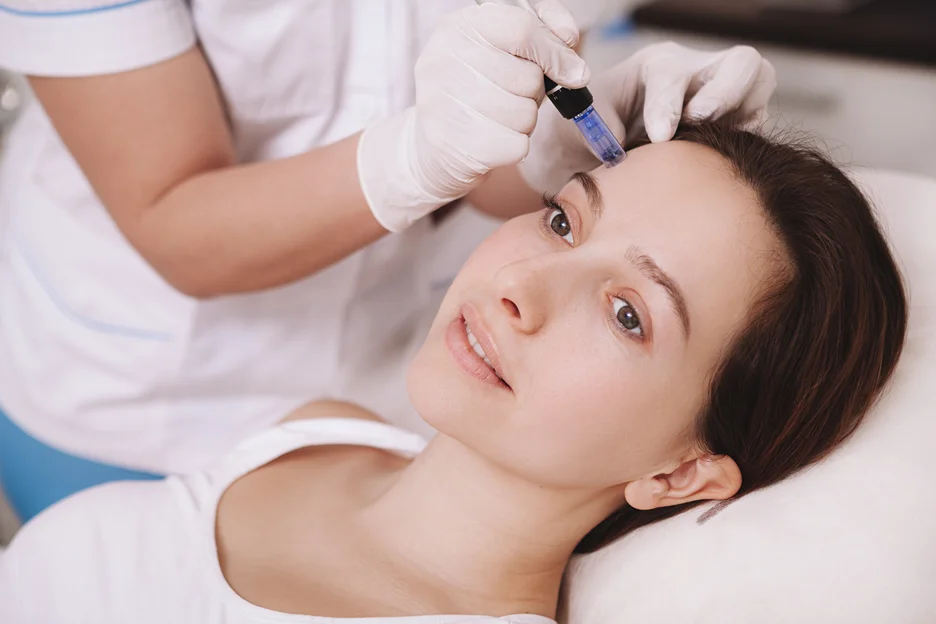
Aseptic technique
The procedure creates thousands of micro-channels in the skin, and each can act as an entry point for pathogens. Sanitation protocols address bacterial, viral and fungal transmission, cross-contamination between clients, and post-procedure infection.
The pen and the treatment space
- Clean the external surfaces of the pen with a medical-grade disinfectant after each use, and follow the manufacturer's guidelines for the device.
- Store devices in a clean, dust-free environment and inspect them regularly for proper function.
- Use only approved devices from reputable sources, inspect cords and components for damage, keep devices away from water and moisture, and follow manufacturer guidelines for charging and maintenance.
- Keep the room clean and well lit, with controlled access, non-porous and easily disinfected surfaces, proper ventilation, and designated clean and contaminated areas.
Hygiene
- Practitioners wash their hands before treatment and between clients, wear fresh gloves for each client, wear clean attire, and keep hair secured away from the treatment area.
- Clients arrive with clean skin free of makeup, remove jewelry from the treatment area, and follow pre-treatment preparation instructions.
Contraindications
Absolute contraindications rule treatment out, while relative contraindications call for clinical judgment before you proceed.
| Category |
Conditions |
| Absolute |
Active infections (herpes, bacterial, fungal); inflammatory skin conditions in the treatment area (acne, rosacea, eczema, psoriasis); history of keloid scarring; blood clotting disorders; uncontrolled diabetes; cancer or recent chemotherapy or radiation |
| Relative |
Anticoagulant medication (treat only with clearance from the prescribing physician); certain medications (high-dose NSAIDs, oral corticosteroids); recent injectables (wait 2 or more weeks after fillers or neuromodulators); autoimmune diseases (assess disease activity and medication status); history of poor wound healing; recent sun exposure or sunburn |
Relative situations may allow a modified approach or call for postponement, depending on your assessment.
Active skin conditions
Do not treat skin with active acne (risk of spreading bacteria across the face), eczema or psoriasis (risk of triggering a flare), rosacea in its inflammatory phase (risk of exacerbation), open wounds, or recent surgery sites. Treatment can resume once the condition is controlled and the skin barrier is intact.
Pregnancy and nursing
Pregnancy and nursing generally contraindicate microneedling. There are three reasons: hormonal fluctuations that affect skin healing, increased skin sensitivity, and limited research on safety for these groups. The conservative approach is to postpone treatment until after pregnancy and breastfeeding.
Intake screening
Screen for:
- Isotretinoin (Accutane) use, current or within the past 6 to 12 months
- Blood thinners
- Immunosuppressants
- History of cold sores, where prophylactic antivirals may be needed
- Recent cosmetic procedures or surgeries
- Pregnancy or breastfeeding
These factors may call for modifying or deferring treatment.
Darker skin types
For Fitzpatrick types IV to VI, the precautions are: increased risk of post-inflammatory hyperpigmentation, possible pre-treatment with tyrosinase inhibitors, a conservative approach to depth and intensity, and rigorous post-treatment sun protection.
Consultation and Aftercare
A consultation covers the client's medical history, a skin assessment, their goals, and a review of pre- and post-care instructions before you treat.
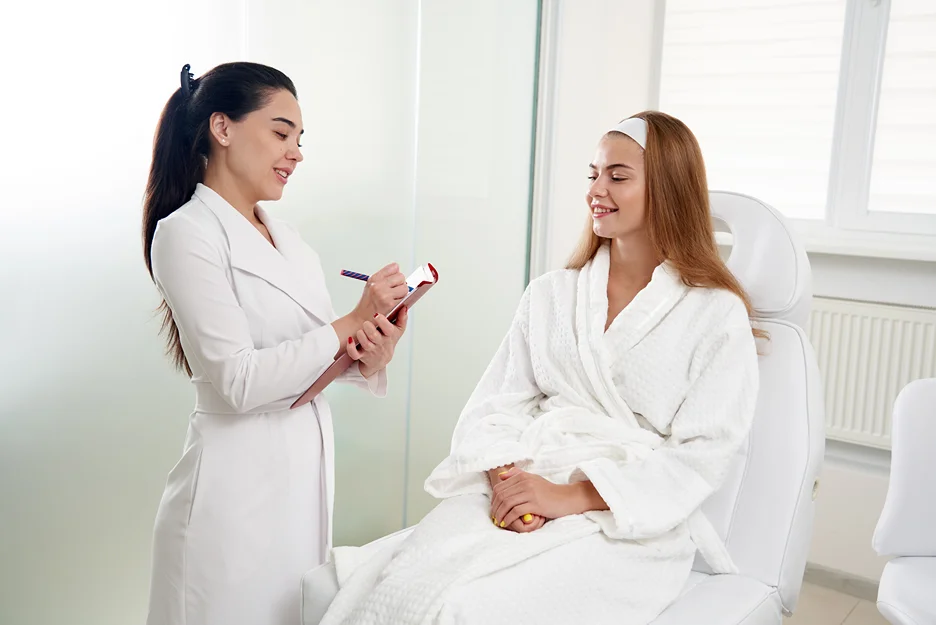
Consultation
A full consultation includes:
- Detailed medical history review
- Skin assessment, including skin condition, elasticity and thickness
- Discussion of the client's goals and concerns
- Review of previous treatments and responses
- Explanation of the procedure and the risks
- A customized treatment plan
- Review of pre- and post-care instructions
Most facial treatments take 30 to 60 minutes, depending on the areas treated and any added therapies. Prepare the client for sensations from mild tingling to moderate discomfort, and for erythema right after treatment.
Documented risks: temporary redness, swelling, pinpoint bleeding and tenderness are common. Infection, hyperpigmentation, allergic reactions and scarring are less common.
Before the session
For one week before treatment, clients avoid sun exposure and tanning beds and stop retinoids, exfoliating acids and harsh products. Blood-thinning medications and supplements are avoided only with physician approval. Clients with a history of cold sores may start antiviral medication. On the day, they arrive with clean skin and no makeup, lotion or sunscreen.
After the session
Expect redness resembling a sunburn, mild swelling, sensitivity, a tight and warm sensation, and possible pinpoint bleeding that resolves quickly. Redness and mild swelling run for about 24 to 72 hours, and dryness and light flaking may follow around days 3 to 5.
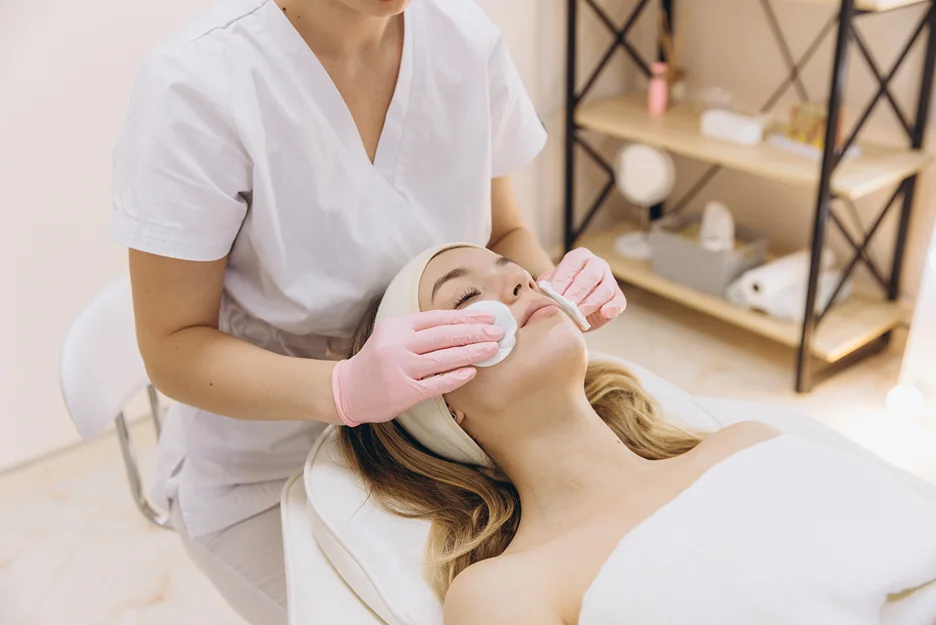
Give clients these instructions:
- Do not touch the treated area, and keep hands clean if touching is unavoidable.
- Cleanse gently with a mild, pH-balanced, non-exfoliating cleanser.
- Hydrate with approved serums and moisturizers. Options include hyaluronic acid serums, ceramide-rich moisturizers and medical-grade healing balms. For serum options, see serums used with microneedling.
- Use a mineral-based, broad-spectrum SPF 30 or higher after the first 24 hours, and avoid direct sun.
- Skip makeup for 24 hours, then choose mineral-based products.
- Avoid saunas, steam rooms, hot showers, swimming and strenuous exercise for at least 48 hours.
- For 5 to 7 days, avoid retinoids, vitamin C, exfoliating acids, fragranced products, alcohol-based toners and hot water on the treated area, and do not pick at flaking skin.
- Sleep with the head elevated the first night.
For more detail, see microneedling aftercare.
EGF masks
The EGF masks are single-use sheet masks, 10 per pack, with epidermal growth factor (EGF) protein as the active ingredient. The listing gives hydration and cellular turnover support as the primary benefit and names microneedling, peels and resurfacing recovery as pairings. Apply after a resurfacing treatment such as microneedling, while the skin barrier is freshly stimulated.
Other options for combining with microneedling are serums with growth factors or hyaluronic acid, exosome therapy, post-treatment masks or LED therapy, and sequential treatments with healing time in between. See microneedling with exosomes.
When clients should contact you
Tell clients to contact you immediately for signs of infection (increasing redness, warmth, pus, fever), severe pain lasting beyond the expected timeframe, unusual swelling or a possible allergic reaction, or any concern about healing.
Key Takeaways
- Depth is a clinical decision. Commonly cited ranges run from 0.25 to 0.5 mm (superficial) to 1.0 to 2.5 mm (deeper), with thinner skin treated more shallowly.
- Use a new sterile cartridge for every client. Never reuse or re-sterilize one.
- Clean the pen's external surfaces after each use and follow the manufacturer's guidelines.
- Screen every client against absolute and relative contraindications at intake, including medications, recent injectables, pregnancy and nursing.
- Give written aftercare and tell clients which signs mean they should contact you.
Related Resources
Browse microneedling pens and cartridges, or contact us with questions about a device or supply.